

A Future of Elementary Learning Where the Teacher Facilitates and Software Differentiates
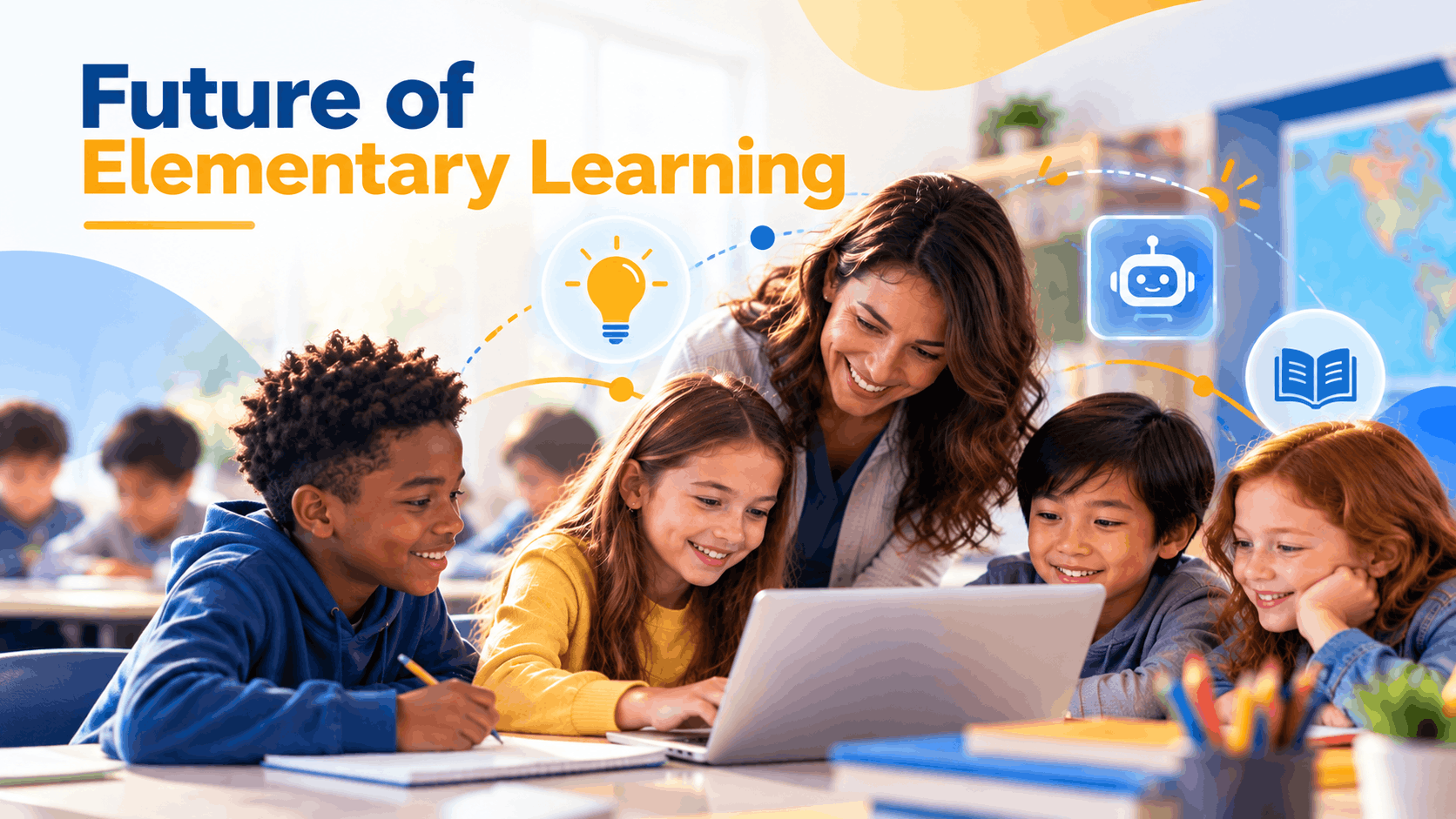
The Future of Learning with AI, Part 1 of 3: AI in elementary school. Start with Why We Support AI in Schools.
We’ve asked the impossible of elementary teachers
We cannot expect our elementary teachers to be full-fledged experts on all topics all the time, or to be concurrently aware of the diverse learning needs of the nearly 30 students in their classrooms. Yet, this is exactly what we have asked them to do for decades. We ask them to teach five different subjects to students with varying interests and abilities, and we expect them to do it all perfectly.
College professors with PhDs in their field of study can be expected to be experts, but we shouldn’t demand this same thing from elementary teachers. Furthermore, when we have the means to put better tools in their hands to support the gaps they cannot be expected to cover or to meet learners’ diverse needs, we should give them those tools; instead, we do the opposite.
The tools are there, if we let teachers use them
For decades, we’ve asked teachers to do the impossible, and even in the face of these daunting challenges, they’ve risen to the occasion to the best of their abilities, but this isn’t enough. New AI-driven learning software has raised the bar for EdTech to levels we’ve never seen before. The tools are there for teachers to use… if we let them.
Curriki believes that AI in elementary school should mean embracing software that helps teachers help students, elevates lessons to new creative heights, differentiates content effectively for diverse learners, and alleviates burdensome administrative work. This software helps teachers become better facilitators of learning in their classrooms. It helps them reach more students so teaching doesn’t feel like triage.
The future of AI in elementary school is a classroom where schools and teachers recognize when to safely offload some learning to software because it can meet the needs of the learner better than traditional methods. This doesn’t mean it replaces the teacher; it means it frees up their time to be a transformative, leading force in the classroom.
Students rarely remember the worksheet the teacher gave them, but they do remember how that teacher made them feel about themselves and empowered them to succeed.
AI in elementary school: the classroom of the future
We at Curriki believe that the future elementary classroom will include innovative technology tools to handle a portion of instruction in adaptive and differentiated ways. We feel that teachers will spend a percentage of their time facilitating digital instruction where advanced AI software works behind the scenes to provide individualized and leveled attention to students’ varying needs. However, the majority of teacher-led learning will happen in meaningful ways that involve conversation, social constructs, manipulatives, or project-based scenarios. The software will handle the individualized, leveled direct instruction, and the teacher will bring the class together for an activity that connects it to the real world.
This model of AI in elementary school is already happening in some specialized schools. It is a difficult transition as it involves a lot of pedagogical adaptation, but we believe it is the path that makes the most sense for the future. We’ve asked the impossible of our teachers for too long. We believe that innovative AI-driven learning tools will help them focus their energy on building transformative experiences for their students.
Is your school ready to bring AI-driven learning tools into the classroom?
Next in the series: Part 2: The Rush to Block That Which Will Be Obsolete (coming soon).